
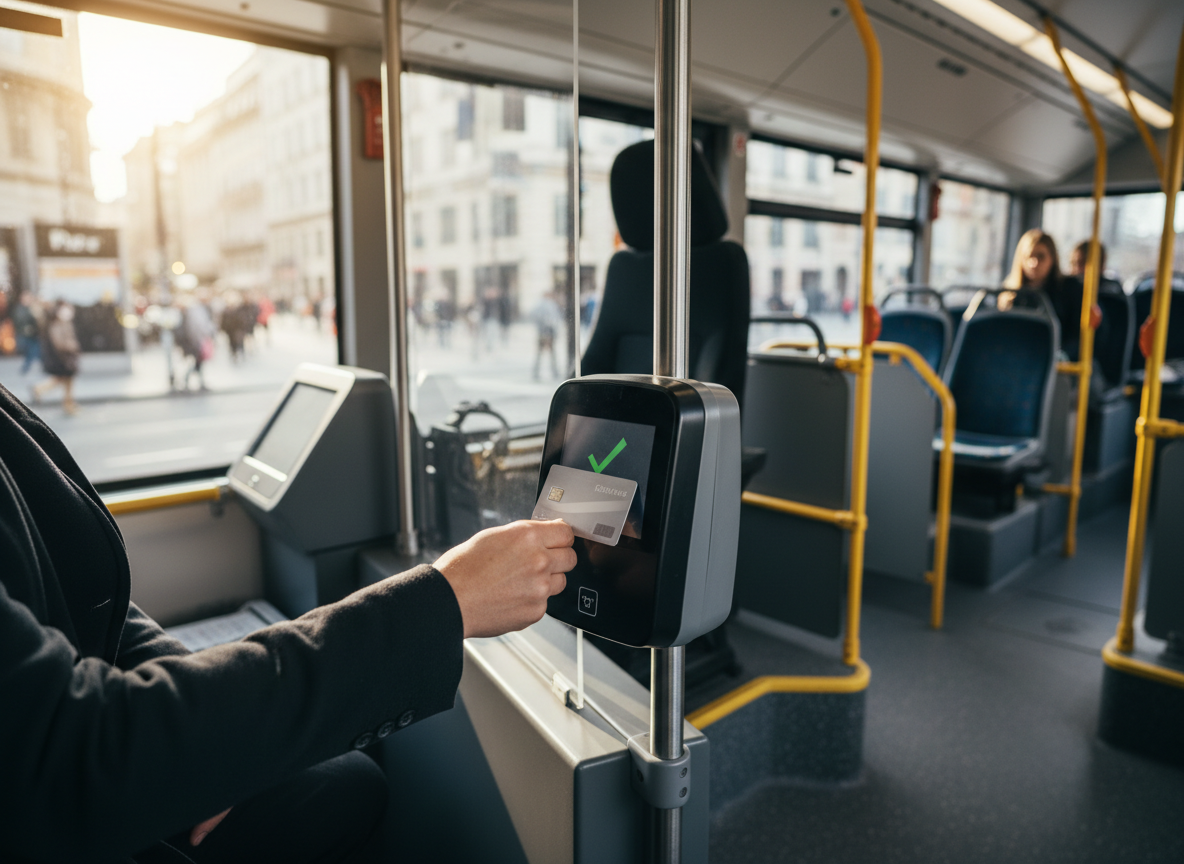
Three transit payment stories crossed my feed this year that are worth reading together rather than separately, because each one is solving a completely different version of the same problem: how do you get contactless fare payment live without breaking what’s already running.
WMATA is the legacy-retrofit case. Metrorail switched on open-loop tap payment in May 2025, and by the time Metrobus followed system-wide on November 18, Metrorail had already processed more than six million contactless trips. That sequencing matters. Rail first, at fixed gates with controlled entry points, let WMATA validate the back end (Littlepay running the payment platform, Cubic supplying the farebox and gate hardware, Mastercard, American Express and FutureCard as card partners) before pushing the same stack onto buses, where readers are mobile, offline connectivity is a bigger risk, and driver-facing exception handling is a different problem than a fixed faregate. The rollout also kept a deliberate seam in place: riders with fare discounts, SmartBenefits, or multi-day passes still have to use SmarTrip, because those products haven’t been ported to the open-loop side yet. That’s not a technical oversight, it’s a scoping decision, and it’s the kind of thing that shows up in a program plan long before it shows up in a press release: which rider segments migrate in phase one, and which stay on the legacy system until their products are ready.
Metrolink is the opposite case: a hard external deadline instead of a phased migration. Its six-month pilot launched June 10 on the San Bernardino Line and Arrow service, the Redlands-to-LA corridor, timed deliberately ahead of FIFA World Cup matches running June 11 through July 19 and the surge of international visitors that comes with them, including a direct tie-in to LA Metro’s special event bus service to SoFi Stadium. What’s more interesting to me than the World Cup framing is what Metrolink built into the pilot from day one: distance-based, pay-as-you-go pricing with a $15 weekday and $10 weekend daily cap already live, not bolted on later. Compare that to TTC’s fare capping launch earlier this month, which required retiring several legacy pass products to avoid a double-benefit problem. Metrolink didn’t have that legacy baggage to clean up because the capping logic was part of the initial design rather than a retrofit. When you’re building against an externally fixed date like a World Cup, you don’t get the luxury of sequencing features in over multiple releases, so the pressure actually forces a cleaner architecture in some ways.
Connecticut is the case that hasn’t gone live yet, and it’s the most instructive one for anyone doing procurement work in this space. CTDOT ran an open-loop pilot back in October 2024 and is now trying to scale that into what would be the first statewide open-loop rollout in the country, with fare capping designed in from the start rather than layered on. The RFP went out in January, and a pre-bid conference in February pulled in 27 vendors, a genuinely long list that includes Cubic, Masabi, INIT, Scheidt & Bachmann, Indra, Kuba, Arrive (formerly Flowbird), LG CNS, Token Transit, moovel, Modeshift, Aurionpro and Littlepay. But CTDOT can’t just extend the vehicle it used for the 2024 pilot. Officials have said federal contracting rules won’t let them purchase the statewide system through Cal-ITP’s procurement program the way they did for the pilot, meaning a state that already proved the technology works now has to run a full competitive procurement from scratch before a single statewide reader goes in. If you’ve ever managed a program where a successful pilot didn’t translate into a fast production purchase because of the contracting vehicle underneath it, this is the same story playing out at state scale.
Put side by side, these aren’t three data points on the same curve. WMATA is managing a phased migration around legacy fare products. Metrolink is compressing a rollout against a fixed external date and using that pressure to build cleaner from the start. Connecticut is stuck at the procurement layer with the technology question already mostly answered. The tap itself has gotten boring, which is exactly the point: the actual project risk in transit payment modernization has moved into sequencing, legacy product decisions, and contracting mechanics, and none of those show up in a rider-facing announcement.
If you’re working through any of these three flavors of rollout right now, I’d be glad to compare notes.
Leave a Reply