
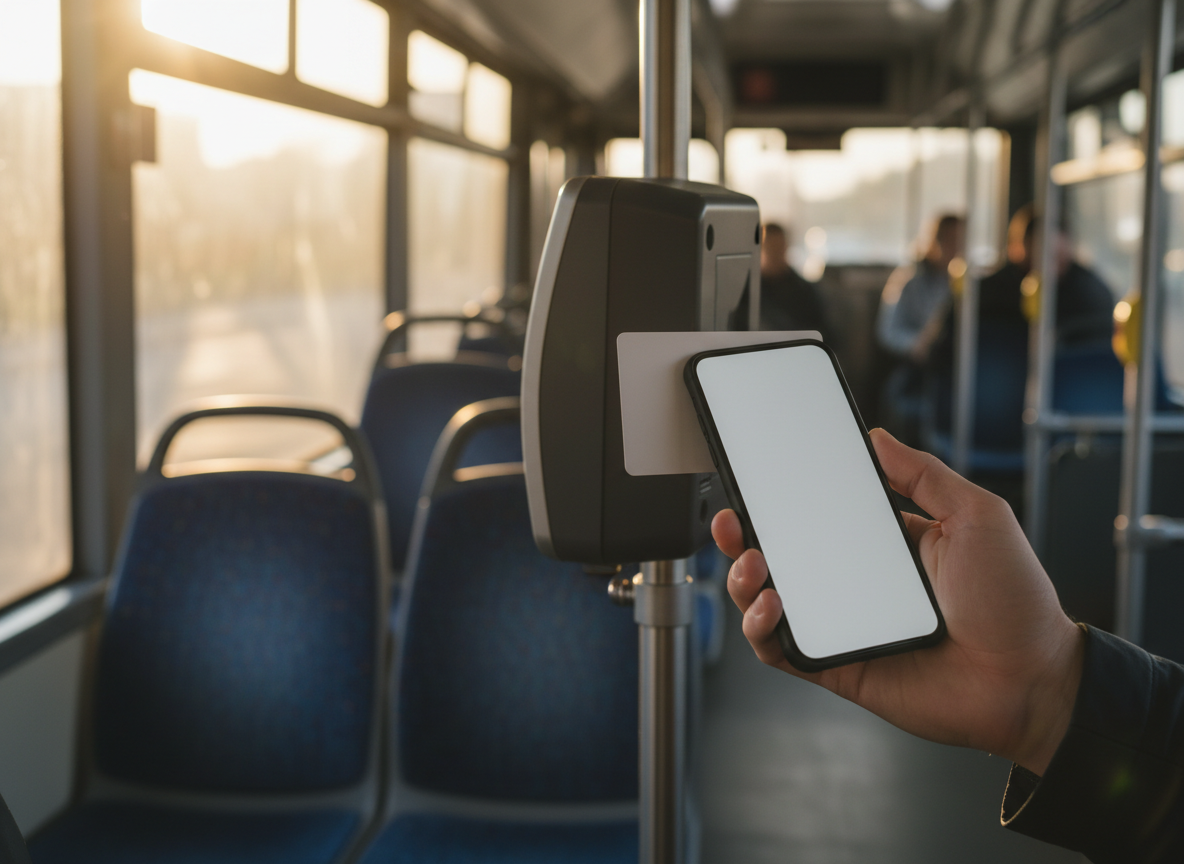
Google pushed out Play Services v26.35 on September 8, and buried in the changelog was a line easy to skim past: Android phones can now use NFC to read a physical transit card and add it, balance included, straight into Google Wallet. Hold the card near the phone, wait a few seconds, and from then on you tap the phone instead of the card.
It’s a small feature by the standards of transit payment news this year. No procurement fight, no nine-figure contract, no outage. But it’s a more interesting NFC development than most of what’s gotten attention lately, because it’s solving a problem that doesn’t show up in press releases: how do you move millions of existing cardholders onto a digital wallet without making them do anything that feels like a migration.
Every agency running a closed-loop card today, whether that’s a SEPTA Key, a Clipper card, or an ORCA card, has the same long tail of riders who are fine with the physical card and have no reason to switch. Account-based ticketing only pays off once enough of that base is actually on it, because that’s where the real savings show up: less cash handling, fewer card-printing and distribution costs, better fraud and chargeback visibility. Getting people there has mostly meant asking riders to register an account, enter a card number, and trust that the balance syncs correctly. That’s a lot of friction for something that currently works fine from the rider’s side.
What Google shipped isn’t a universal card-cloning trick, and it’s worth being precise about that, because the coverage around it has been a little loose. The NFC read only works where Google already has a data-sharing agreement with the transit operator, the same kind of agreement behind existing integrations like Seattle’s ORCA-in-Wallet rollout with INIT. The new piece is just the onboarding step: instead of typing in a card number or downloading an agency-specific app, you scan the card and the phone handles the lookup. It’s a nicer front door bolted onto plumbing that already existed. Monthly pass products reportedly aren’t supported everywhere yet, which tells you the agency-by-agency agreements, not the NFC read itself, are still the bottleneck.
That’s the part worth sitting with if you’ve ever run a fare-system transition. The demo is the easy 80%. The hard 20% is the per-operator security review of how card data gets read and transmitted, the reconciliation logic for when a digitized balance doesn’t match what the backend thinks it should be, and the support process for the rider whose card now shows up twice, once physical and once digital, with two different balances because they tapped the physical card again out of habit. None of that is NFC’s problem to solve, but all of it determines whether this feature actually moves adoption or just generates support tickets.
Transit agencies are also asking their fare validators to do more at the same time Google is asking phones to do less work for the rider. SEPTA rolled out a multi-rider contactless feature in May, letting one tap of a credit card or phone cover up to five riders across bus, subway, trolley, and regional rail, timed deliberately ahead of this summer’s PGA Championship, MLB All-Star Game, and FIFA World Cup matches in Philadelphia. That’s a validator-side change: firmware and back-end logic that has to correctly split a single tap into five fare events without creating a reconciliation mess, tested against the kind of event-day volume spikes that don’t show up in normal ridership data. It’s the mirror image of the Wallet onboarding problem: one side is making the tap do less friction for the rider, the other is making one tap carry more transactional weight.
Google’s been chipping away at the tap itself too. Android Authority’s APK teardowns have surfaced a still-unshipped “Express Transit Card” setting that would let a rider designate a default transit payment card and tap without unlocking the phone at all, closing a gap with what Apple Pay and Samsung Wallet already offer. It’s been sitting in test builds since at least last November, which is its own small lesson: NFC payment features tend to show up in code well before they show up in a press release, and “coming soon” can mean a year.
None of these on their own is a big transit payment modernization headline. Together they’re a reasonable snapshot of where NFC’s effort is actually going in 2026: not toward faster taps, which have been fast enough for a while, but toward lowering the cost of getting people onto the systems agencies have already built. If you’re working through a similar migration problem on your own fare program, I’d like to hear how you’re thinking about it. Always happy to compare notes.
Leave a Reply